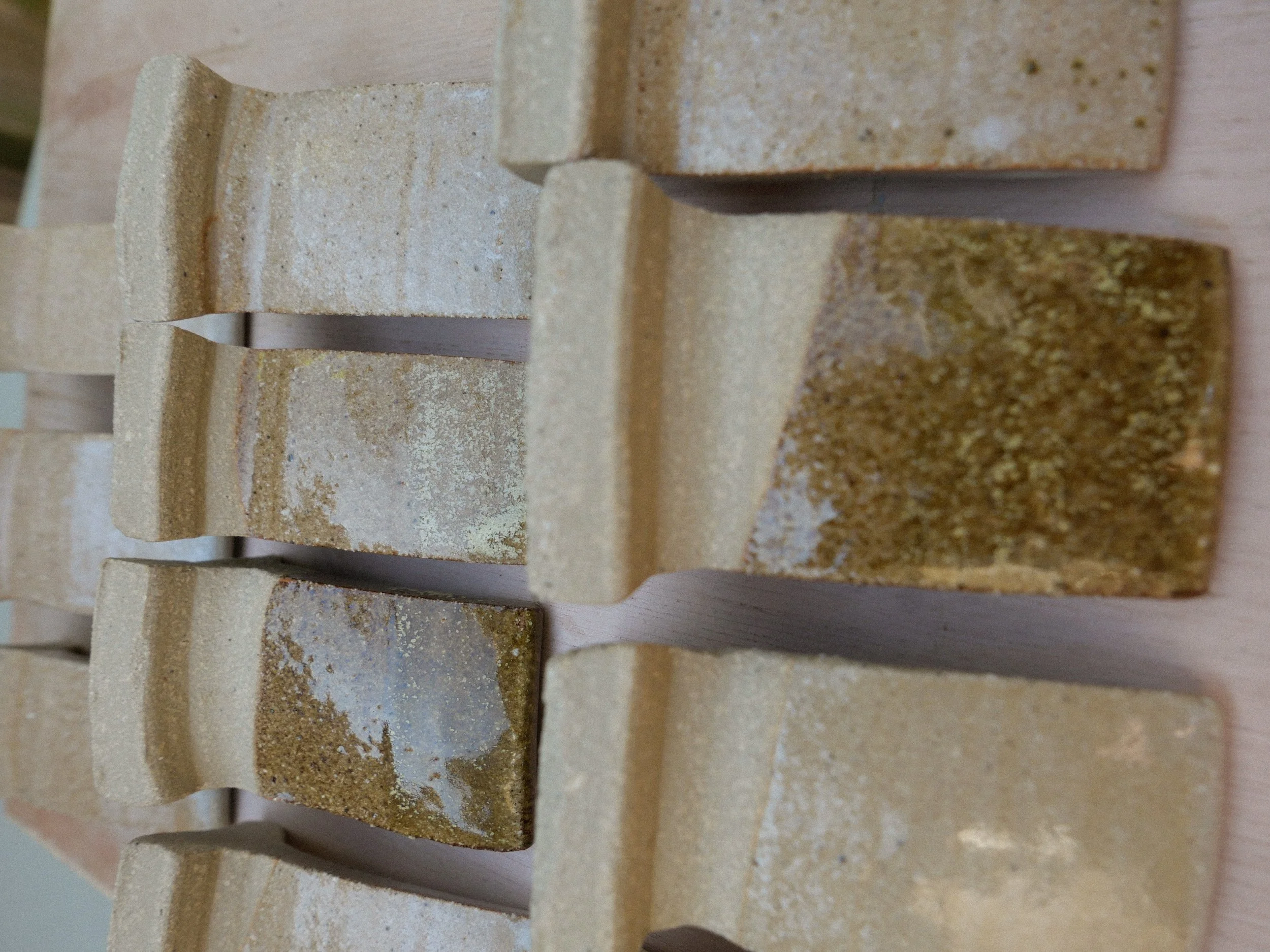
Transparently made, from ground to table.
Every ingredient used in the making of these ceramics has been sourced as locally as possible, with only two exceptions from mainland Europe. Full ingredient lists can be found below, reflecting my commitment to material transparency and thoughtful sourcing.
All of my glazes are named in Italian, inspired by my Sardinian heritage and the Mediterranean landscapes and cultures that influence my work.
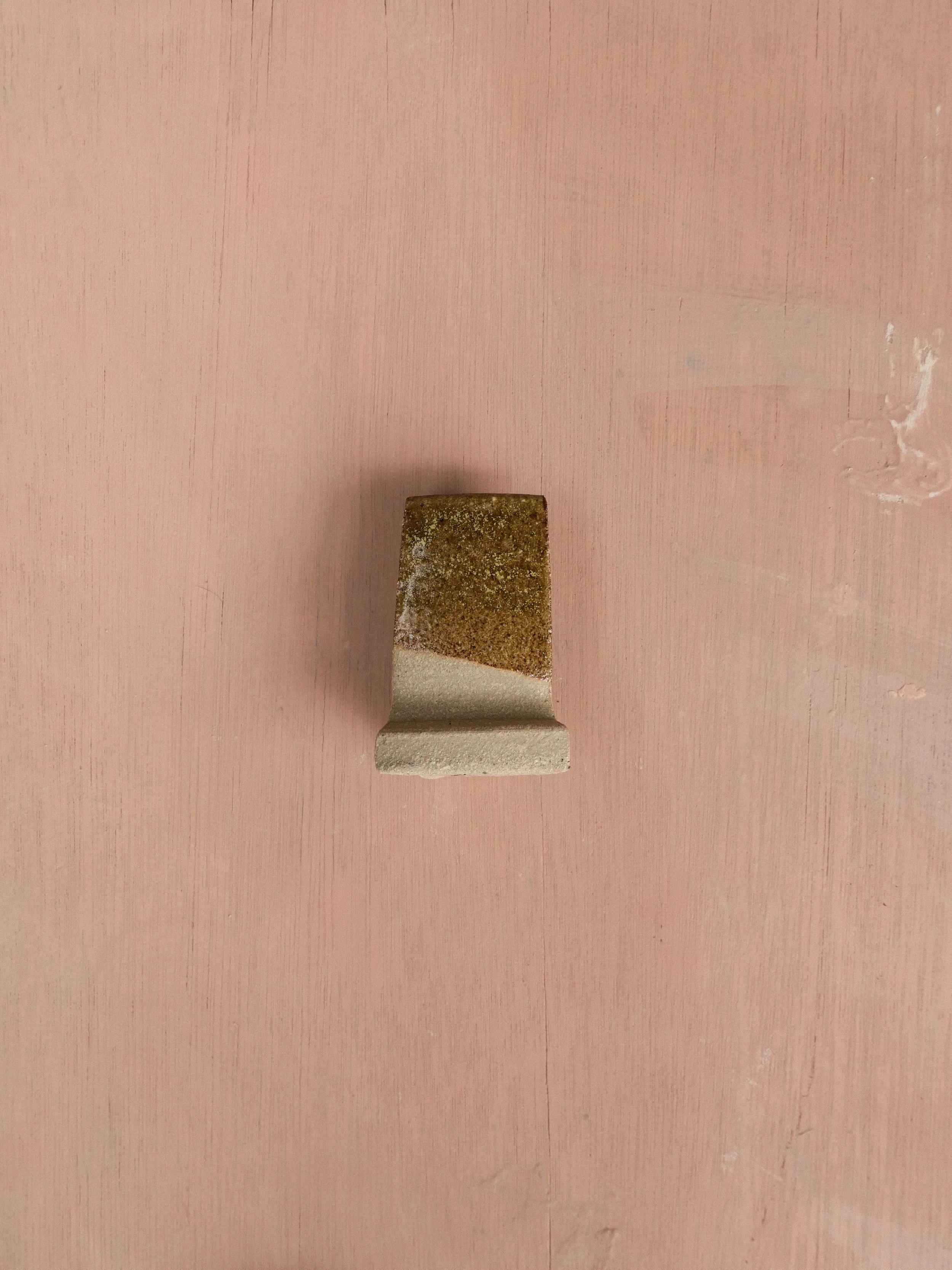
‘Oliva’ - Olive in Italian
Ingredients:
Stoneware clay, St Agnes, Cornwall
Dolomite, Yorkshire
Soda Feldspar, Norway
Whiting, Yorkshire
Quartz, Scotland
China Clay, Cornwall
Red iron oxide, Spain
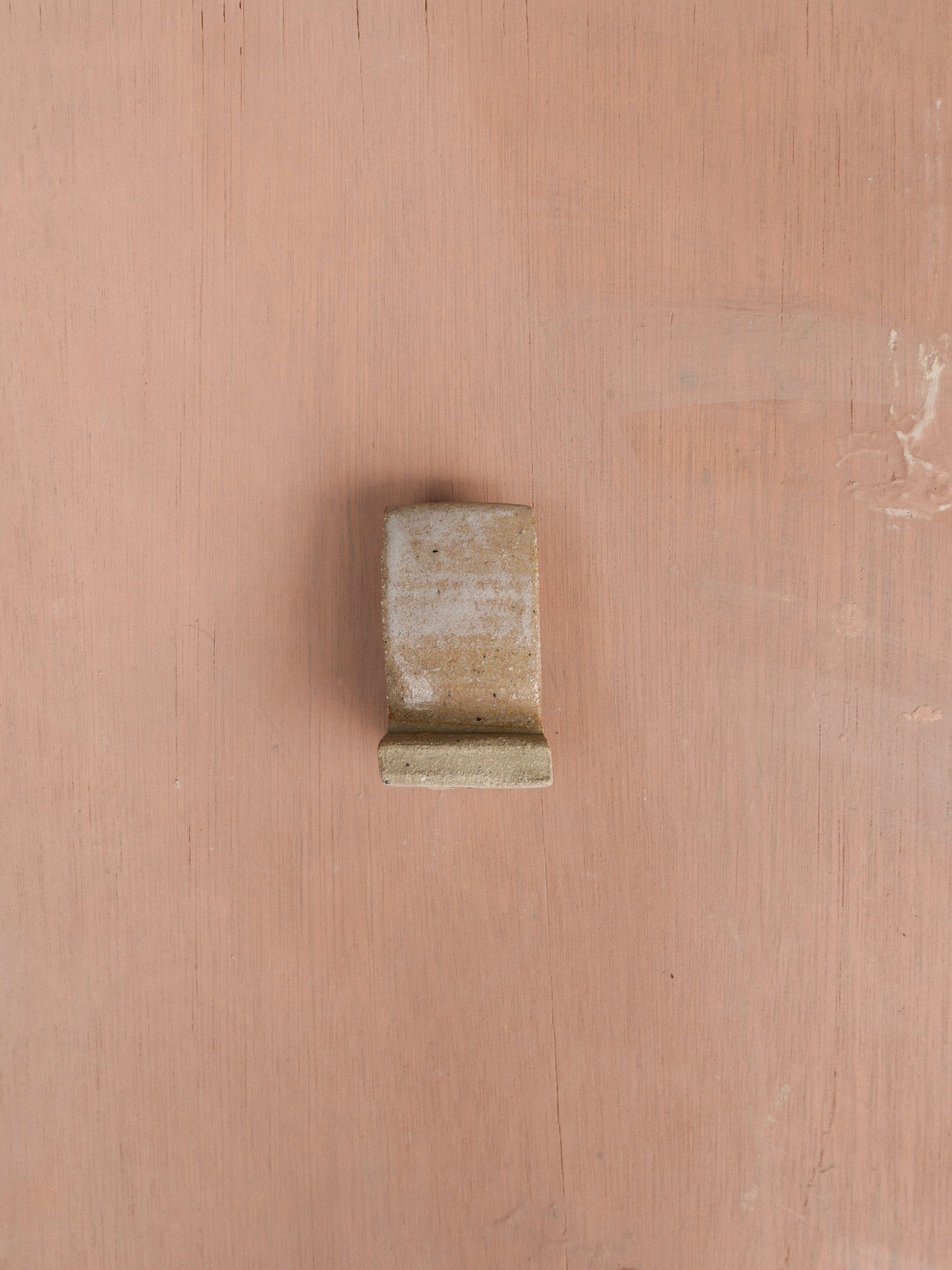
‘Sale’ - Salt in Italian
Ingredients:
Stoneware clay, St Agnes, Cornwall
Dolomite, Yorkshire
Soda Feldspar, Norway
Whiting, Yorkshire
Quartz, Scotland
China Clay, Cornwall
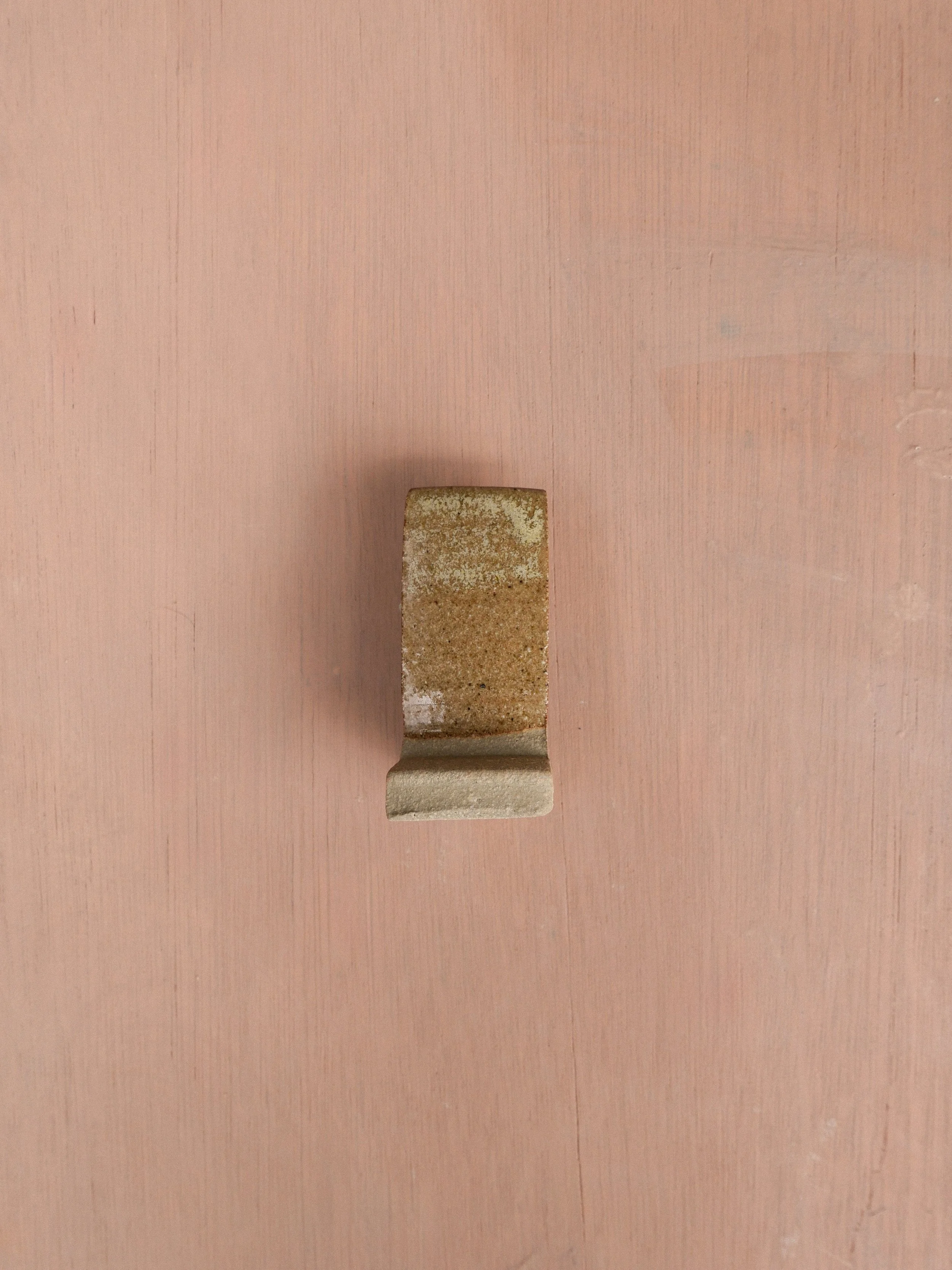
‘Pistacchio’ - Pistachio in Italian
Ingredients:
Stoneware clay, St Agnes, Cornwall
Dolomite, Yorkshire
Soda Feldspar, Norway
Whiting, Yorkshire
Quartz, Scotland
China Clay, Cornwall
Red iron oxide, Spain
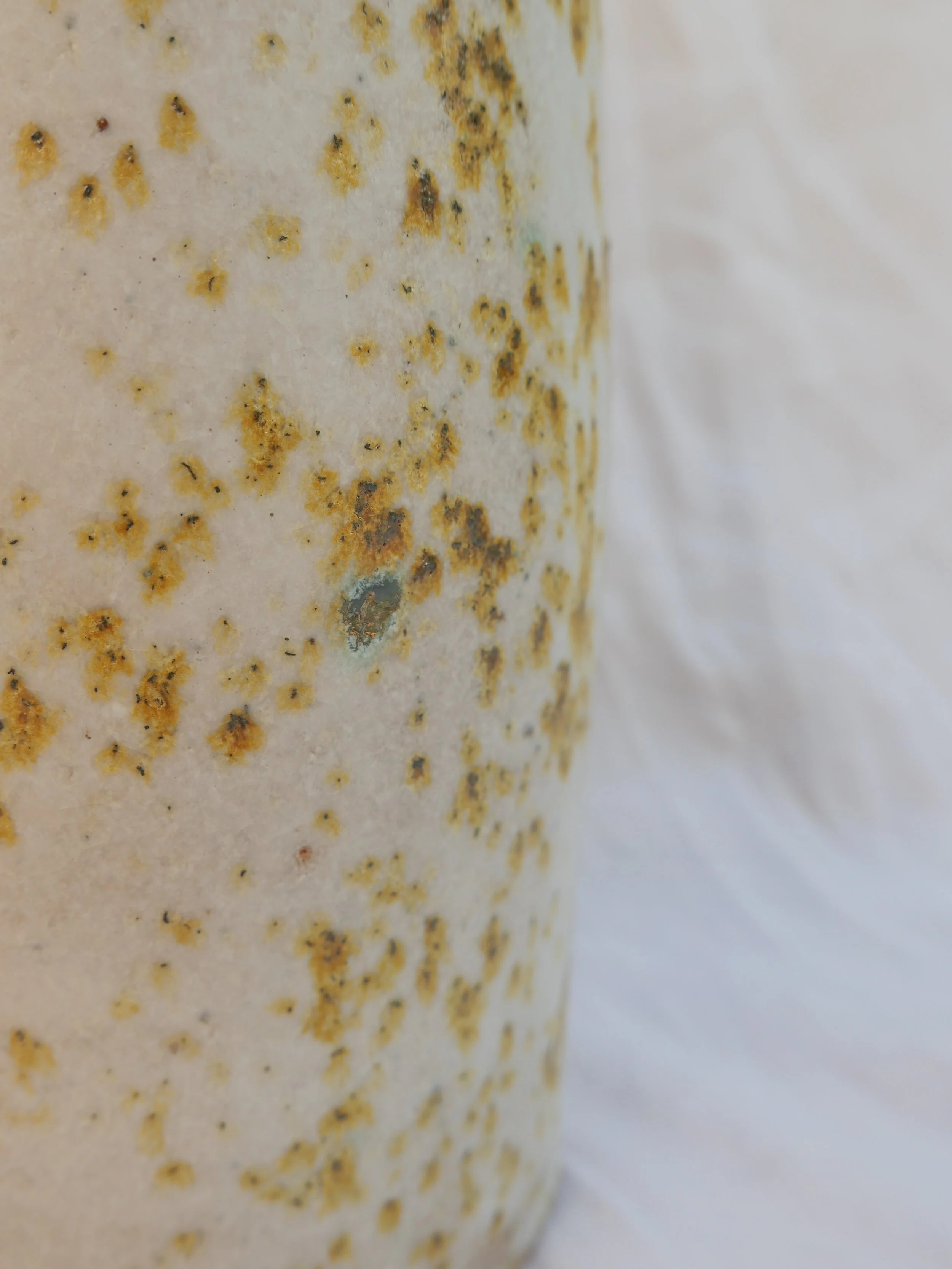
‘Bosco’ - Woods in Italian
Ingredients:
Stoneware clay, St Agnes, Cornwall
Dolomite, Yorkshire
Soda Feldspar, Norway
Whiting, Yorkshire
Quartz, Scotland
China Clay, Cornwall
Recycled metal waste from AUP
Sustainability and my work
Sustainability is at the core of my ceramics, from the materials themselves to the firing process. As some of the Earth’s resources are deemed critically low and we grapple with being in the midst of a climate crisis, it seems only right to be adapting, where possible, our crafts and making.
I spend hours researching material supply chains to ensure that none of my ingredients are critically low or coming from conflict zones, artisanal mines, and travelling unnecessarily far. Many handmade ceramics are made using commercial clays and glazes with materials having travelled across the world, and in some cases, mined in conflict zones where child labour and unethical practices are used to obtain them. Most of my ingredients come from the U.K., with a few exceptions to European countries.
Studies have shown however that in a potter’s carbon footprint, the biggest carbon output comes from kiln firings. I use a highly insulated eco-top kiln supplied with energy from a green energy provider, and always ensure my firings are tightly packed so no space is wasted.
My practice is by no means perfect, and I don’t believe perfection is truly attainable when it comes to sustainability in ceramics. There are always further steps that can be taken, materials to question, and processes to refine. What matters most to me is a continual commitment to learning, asking questions, and making considered adjustments as I go. I will continue to adapt my work wherever possible to ensure I am offering you the most ethical and sustainable ceramics I can at any given time.
If you have any questions around sustainability and material sourcing in my work, please do get in touch via my contact page.
“Individual ceramicists have the ability to make changes that lessen the burden on the future.” - Sara Howard